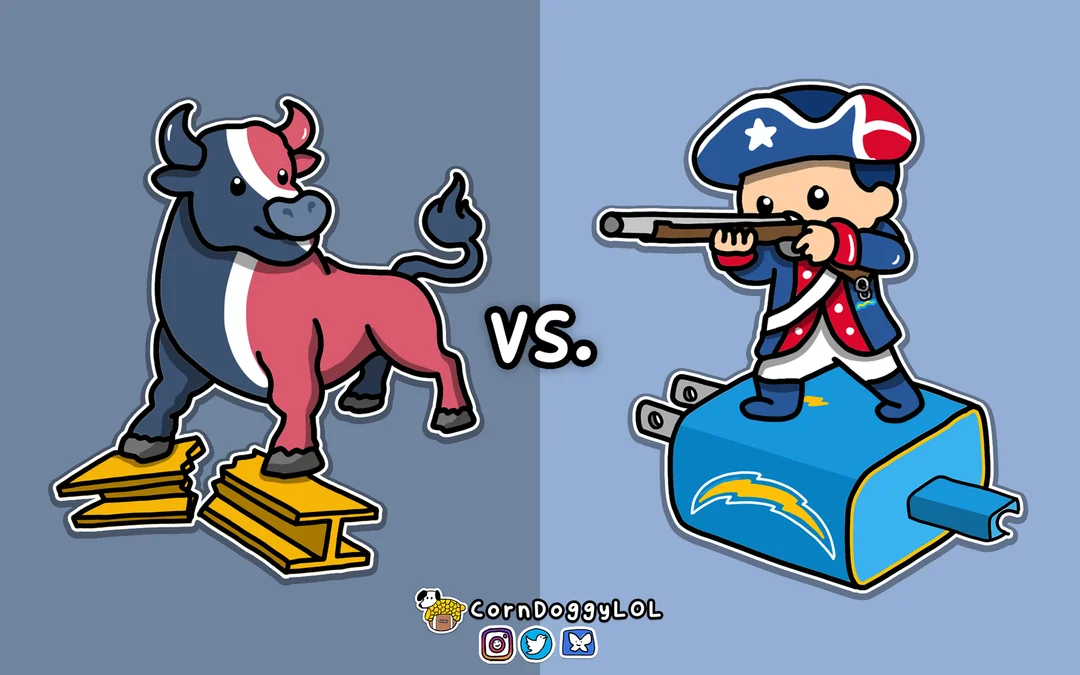
Author’s Note: Thumbanail was pulled from CornDoggyLoL’s posts in Texans’ subreddit. Love her art, support her here
The regular season is over. Playoff matchups have been decided. Two (in)famous streaks going head-to-head, the Texans never winning a road playoff game (0-6) vs. the Steelers not winning a playoff game since 2016 (0-6). Houston’s hot off of 9 straight wins with a historically dominant defense at every level (ask Josh Allen about his loss). The Steelers are not, squeaking in off a win-or-go-home finale with the Ravens and looking inconsistent all year. But Aaron Rodgers has a ring and four MVPs, and he’s buried better teams than these Texans in January before. Vegas has Houston by 3. Someone’s luck will change come Monday. It all comes down to the matchups.
The Trenches
The Texans have a top 5 pass rush in football (and best defense). The Steelers allow the lowest pressure rate in the league at 25.0%. Unstoppable force meets immovable object (until Monday, when one becomes movable).
Pittsburgh’s pass protection looks elite through the eye-test and all the stats back that up. First in no-blitz pressure rate allowed (25.4%). Rodgers gets the ball out in 2.56 seconds. Their pass block win rate ranks 3rd (71%), and the run blocking is solid too. 9th in RBWR (72%) with a 16.5% stuff rate. Dylan Cook, Zach Frazier, and Isaac Seumalo headline this line (all top ten pass blocking linemen). Quick throwing QB + stout line = rare sacks. They’re the real deal.
Houston’s front isn’t a slouch either. The win rate numbers (21st in PRWR) don’t tell the story. Danielle Hunter (15, good for 3rd) and Will Anderson (12, 8th) have combined for 27 sacks, and this defense has suffocated everyone (2.8 sacks per game). But they’ll be tested. The Steelers are closer to the Broncos offensive line (1 sack) than the Chargers offensive line (5 sacks) that the Texans feasted on. I don’t want to be a debbie downer though, as the Bills offensive line is ranked even better by some metrics and the Texans ripped them apart for 8 sacks. This matchup is a WASH (closer than either team wants), but one of 3 that define this game.
The Texans don’t match up as nicely on the other side. Their offensive line ranks 30th in pass block win rate (56%) and dead last in run block win rate (68%, 32nd). Not good. Those stats are a little misleading though. By that same composite metric they’re middle of the pack (20th). ESPN, the ppl behind PBWR and RBWR, just happens to REALLY hate them. Regardless, the Texans O-line standouts Trent Brown, Ed Ingram, and Tytus Howard will be fighting for their lives.
Pittsburgh’s defense ranks 4th in pass rush win rate (41%). TJ Watt has taken a step back from his game-breaking days, but still combines pass rush prowess (7 sacks) with legitimate ball skills (2 interceptions). Behind him? A bunch of Steelers defenders bringing pressure of their own (2.8 sacks per game). Call that a real team effort (I heard Mike Tomlin brings orange slices to practices to hammer it home).
If CJ Stroud doesn’t have time, Houston’s nine-game streak gets its first real test. And if they can’t run either? Cameron Heyward (PFF’s No.1 DL) has been collapsing pockets and stuffing runs from the interior all season. Against the league’s worst run-blocking line, he could live in the backfield. Steelers D-line KO’s the Texans O-line.
The Playmakers
The Pittsburgh playmakers vs. the Texans secondary/linebacker crew is aptly described as coughing baby vs. hydrogen bomb. The top receiver for the Steelers, DK Metcalf was suspended for the last two games of the season, but even taking his season pace into account they didn’t have a 1000 yard receiver (850 actual, he would’ve finished around 969 yards). There’s a steep drop off after him, with their second RB, Kenneth Gainwell (486 yards) or TE Pat Freiermuth (also 486 yards) being next best. While the receiving options are thin, the rushing attack is a different story (4.3 YPC), with Jaylen Warren putting up 958 yards and Gainwell putting up 537.
That adds up to a thoroughly mediocre offense though (.02 EPA/play, 14th in NFL). The Texans’ secondary is the opposite. Derek Stingley Jr., Calen Bullock, Kamari Lassiter, and Jalen Pitre are all Pro Bowlers this year (Stingley as a starter, the other three as alternates). The Texans don’t allow completions. Stingley (43.3%), Bullock (50.8%), Lassiter (57.7%). Good luck finding someone open. Stingley may be the best cover corner in the game, giving up a measly 54.0 QB rating. And when you do throw? Lassiter has 4 interceptions (8th) and 17 passes defended (6th) on the year and Bullock has 4 interceptions (8th). Jalen Pitre is 2nd amongst safeties by PFF and has delivered some of the hardest hits of the year. Add in Pro Bowl linebacker Al-Shaair patrolling the middle (103 tackles, 2 interceptions), and it’s a pick your poison adventure for opposing QBs. Texans’ secondary CLAMPS the Steelers playmakers.
On the other end, it’s less skewed but still Texans favored. The Texans have a group of position players led by Nico Collins fresh off his third straight 1000-yard season (3rd Texans WR to do that), safety valve TE Dalton Schultz (777 yards), and rookie sensation Jayden Higgins (525 yards). The rushing attack is inconsistent (3.9 YPC), but moves the chains through Woody Marks (703 yards) and Nick Chubb (506 yards).
The Steelers have a pair of talented corners in Joey Porter Jr. (48.5% completion percentage, 57.2 passer rating allowed) and James Pierre (42.9% completion percentage and 41.4 passer rating allowed) as the 2nd ranked PFF CB, but are much weaker everywhere else. The linebackers can’t tackle. Patrick Queen has 27 missed tackles on the year (18.5% miss rate). Malik Harrison is worse (22.6% miss rate). And Jalen Ramsey’s move to safety has been rough. 70.4% completion percentage allowed, 118.1 passer rating, 1 pick on 81 targets. The middle of the field is open. Porter and Pierre can lock down the outside, but Schultz and the backs will feast underneath. Texans’ playmakers OVERWHELM the Steelers secondary.
The Quarterbacks
This definitely isn’t 2011 Rodgers (MVP). It isn’t even 2021 Rodgers (also MVP). This is a quarterback averaging a career-low 207.6 ypg, 2.4 air yards/pass attempt, and a low 73.9% on-target percentage. The Steelers are following his lead, putting up a mediocre .03 Passing EPA/play, 16th in the league (smack-dab league-average). It’s a chicken/egg debate with Rodgers, are his stats looking bad because the Steelers position players are poor? Or are they underperforming because he isn’t what he used to be? Probably a bit of both, but he’s doing what the Steelers need, taking care of the ball (only 7 interceptions), avoiding sacks (29 sacks, 11th in NFL), and has led 3 game-winning drives. Old man still got it (to a degree).
Then again, it’s not like Stroud’s career has been all roses. CJ Stroud’s second season was rough. 52 sacks. 12 interceptions. A 46.4 QBR that had people questioning if the rookie year was a fluke. This year has been different. The completion percentage is up (64.5%, career high). The sacks are down (23, 5.16% sack rate vs. 8.90% last year). The QBR is back (62.4). He’s putting up .11 Passing EPA/play (10th, min. 100 plays), nearly four times what Rodgers is generating. The difference? Stroud learned to take what the defense gives him. More throwaways (22, up from 16 his rookie year). Less hero ball. Ironically, he’s playing like Rodgers used to (well, minus the 60-yard flick-of-the-wrist bombs). And he’s doing it while getting pressured far more than Rodgers is now (21.4% vs. 15.6%). The 0-3 start wasn’t on him. Nine straight wins since are. He’s not the finished product, but he’s going up while Rodgers goes down. Nice contrast for the Texans.
We’ve seen the blueprint to beat Rodgers this season. Force him into obvious throwing situations and pin the D-line’s ears back. The Seahawks and Chargers can attest to that, having forced him to 54.6% and 51.6% completion percentage with 2 interceptions and 3 sacks a piece. He simply can’t beat pressure like he used to, and with the dominant secondary the Texans have, any bad throws will be hoovered up.
The same can be said for Stroud. The Jaguars (2 sacks, 2 interceptions) and Seahawks (3 sacks, 1 interception) forced him into obvious passing situations and made him pay. When Stroud has to throw 38 or 49 times, the mistakes pile up. Pittsburgh has the pass rush to put him in that spot. Whether they can capitalize is another question with two talented CBs but little help behind them.
What makes this a closer than it should be is Rodgers’ playoff experience. He has 21 playoff starts. No Tom Brady, but that’s over a full season, averaging 267.9 ypg with ~2.0 touchdowns a game. He saves his best for the brightest lights. Comparatively, CJ Stroud has played in 4 playoff games (averaging 244 ypg and 1 td a game), impressive for the short length of his career but nothing compared to Rodgers. Stroud’s the better quarterback right now. Rodgers has been the better quarterback in January. I’ll take the young gun over the old dog. Can’t teach him new tricks, after all. EDGE: STROUD.
Sideline Battle
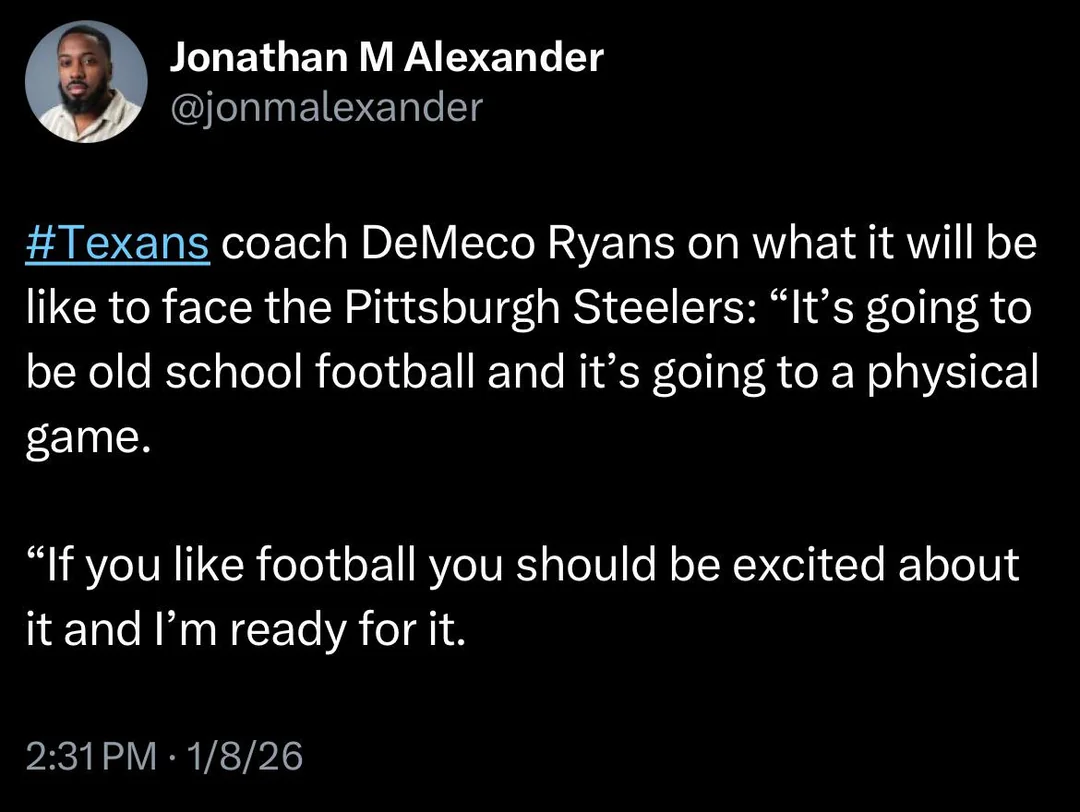
Every year, Mike Tomlin has pieces written about him potentially being fired by the Steelers. Every year, he drags the Steelers to 8-8 (now 9-8) or 9-7 (now 10-7). He’s always in the playoff hunt, always making games uncomfortable for the opposing team. The standard is the standard indeed. Then, he makes it to the playoffs and it all falls apart. 0-6 in the playoffs since 2016 isn’t good.
Demeco Ryans is probably an interesting parallel to Tomlin himself. 32-19 in three seasons, 2-2 in playoffs. Three winning seasons in a row to start his coaching career (two division titles, and the third while not division title worthy is his best record so far). Demeco is on the rise while Tomlin is seemingly stagnating.
But neither of them calls plays. This matchup comes down to the coordinators.
It’s the OCs Arthur Smith and Nick Caley that’ll decide this matchup. Specifically, their redzone efficiency. The Texans have been brutal in the redzone this year (43.59% TD conversion, 31st in NFL). Nick Caley replaced Bobby Slowik after last year’s playoff loss when they couldn’t punch it in against Kansas City. The scheme issues haven’t fully resolved. When the field shrinks, Caley’s offense stalls because there are no hot routes, no answers for pressure, and the running backs (Marks, Chubb) rank 44th and 55th in redzone EPA/rush. Compare to the Steelers, who are middle of the pack in the redzone in EPA/play (.01) at 14th, but looking at rushing only (Arthur Smith’s bread and butter) they jump up to 10th (tied for 8th at .07 EPA/play).
With that in mind, it doesn’t matter that Burke’s (Texans’ DC, calling 2nd best defense by DVOA, lowest in league with 277.2 ypg, and are leading the league with -.13 EPA/play Read more here) defense is the best unit on either sideline. Caley’s redzone struggles are a bigger problem than anything Teryl Austin (Steelers DC, 11th DVOA, .01 EPA/Play ranked 19th) will plan. The Texans are fighting themselves here. Steelers’ sideline EDGES the matchup.
This is a game that’ll either be a blowout or decided by inches. No in-between. Either the Texans eat Rodgers’ lunch, force him to throw incompletions and then interceptions, or the Steelers do their classic grit and grind football and make the game too close to call. And, considering I have it at 3-2 for the Texans, that sounds about right. Someone’s 0-6 streak ends Monday night. I’ll bet it’s Houston’s. Nine straight wins, the league’s best defense, and a quarterback who’s figured out how to win ugly. Rodgers has the resume, but is just looking old. Stroud has the momentum. Texans win their first road playoff game in franchise history and stay the scariest team in the AFC.