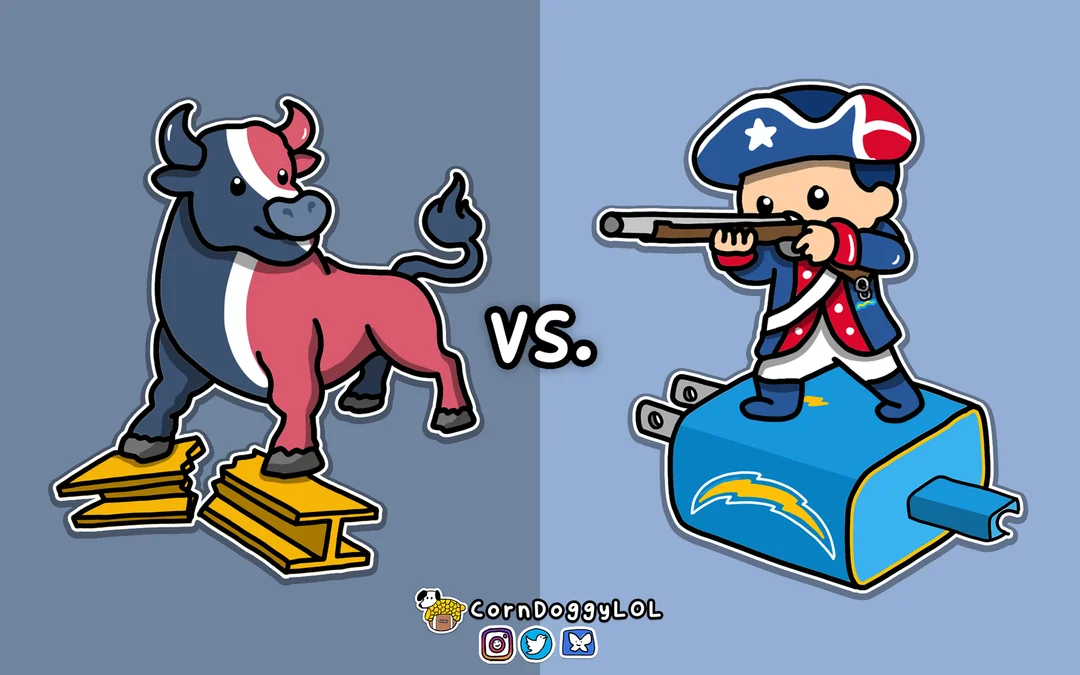
So, you believed in the Texans getting past the Divisional Round? Me too. The league’s best defense and a 10-game winning streak said so. Getting their teeth kicked in by the Patriots in yet another divisional round loss proved otherwise.
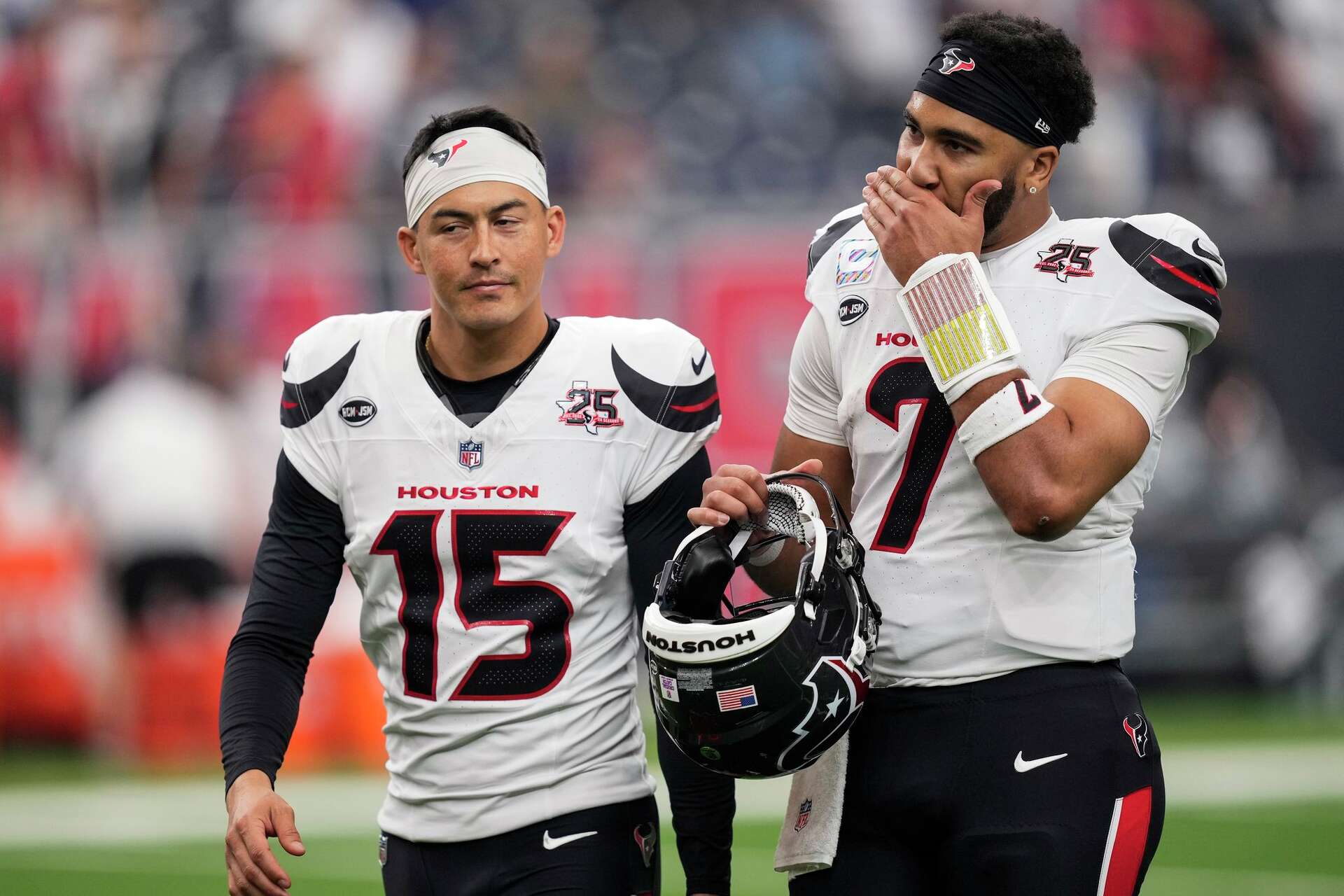
Let’s not sugarcoat it. CJ Stroud was bad. Seven turnovers in two playoff games. Four interceptions against New England. A 28.0 passer rating in an elimination game. That’s on him.
Unfortunately for knee jerk reactionists, you can’t replace your quarterback in one offseason (Tom Brady isn’t unretiring). Stroud is the variable the Texans are stuck with. So you fix what you can fix: the offensive line that got him killed, the running game that never found traction, and the depth that disappeared when Dalton Schultz went down. Effectively, control what you can control and hope he bounces back.
Here’s who fits the scheme and the cap.
Fixing the Foundation (Offensive Line)
Offensive linemen aren’t the calendar models of the NFL. More like Mack trucks. But they do the unsexy work that wins championships. The Texans finished 30th in pass block win rate and dead last in run block win rate. Stroud has been sacked 113 times in 46 career starts. That’s not a quarterback problem. That’s a protection problem.
David Edwards (Guard):
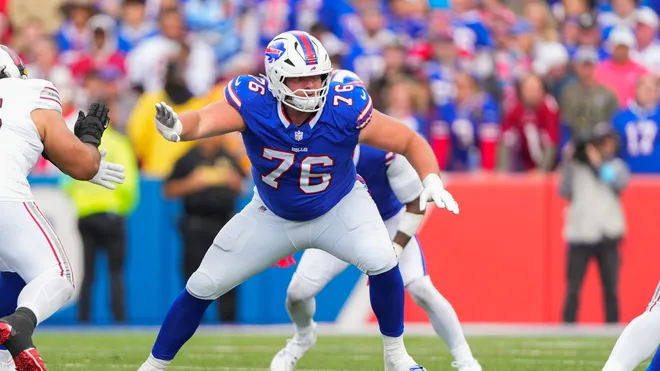
Edwards is the prize of this free agent class at guard. Full stop.The Bills’ left guard posted a 71.4 PFF grade in 2025, ranking 19th among guards. His pass blocking graded out 14th at the position. CBS Sports called him “sturdy in pass protection, once he anchors down, it’s hard to get him to budge.” That’s exactly what the Texans need.
Nick Caley’s offense asks linemen to be physical at the point of attack, creating vertical push on duo and gap runs. Edwards would be the anchor to hold up in pass protection and has the athleticism to climb to the second level. He’s 28 with 61 career starts, entering his prime. ESPN’s Benjamin Solak called him “the lone exciting player who could be available in the guard market.” The Bills are unlikely to re-sign him with both Edwards and center Connor McGovern hitting free agency and cap constraints looming after firing Sean McDermott.
The cost? Spotrac projects he’ll get close to $20 million AAV given how rare above-average guards are. Expensive? Yes. So what? This is the position that got exposed in January (Tytus Howard, uh, did not look up to the task). You watched Stroud run for his life against New England. I for one, don’t want to watch that again.
Cade Mays (Center):
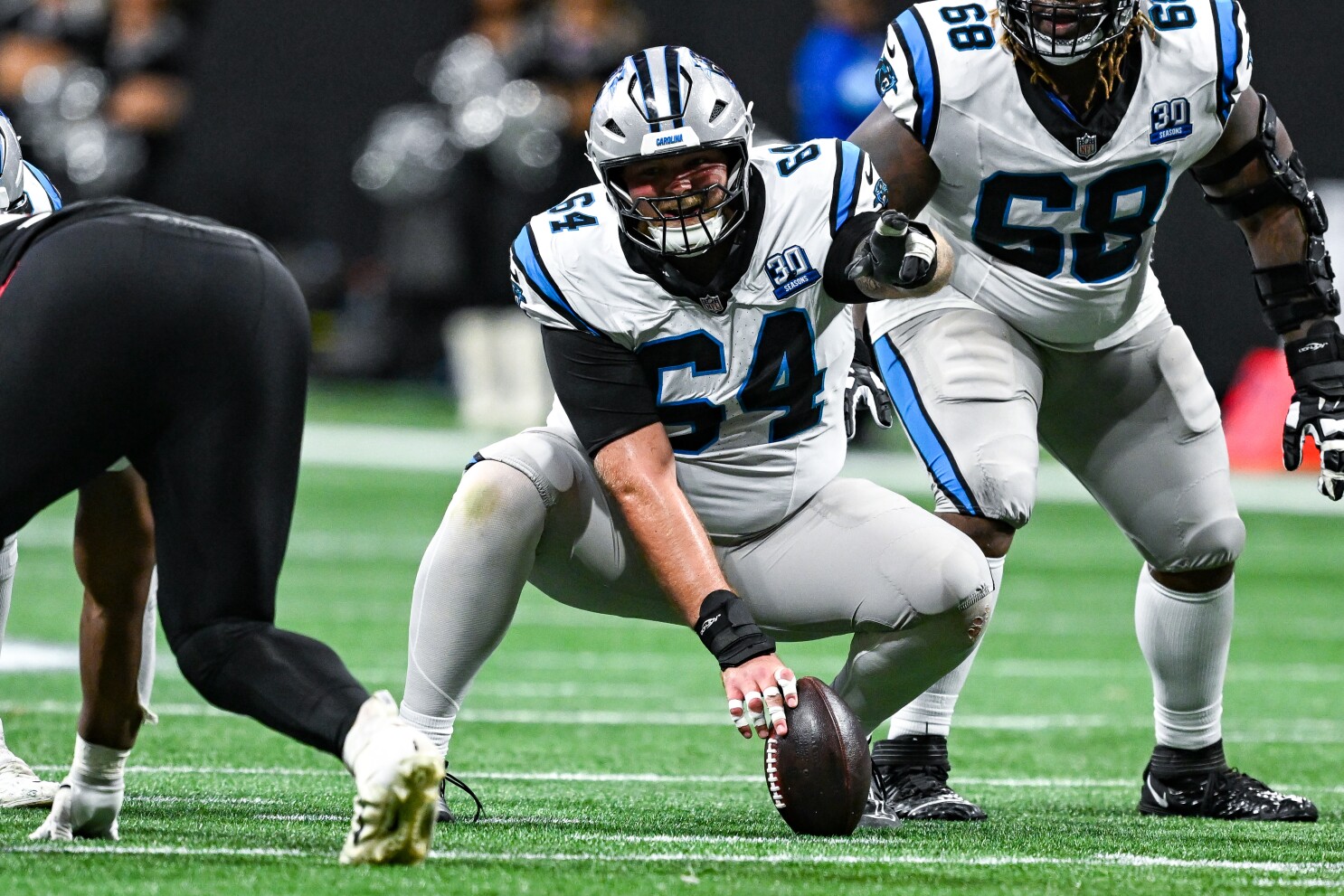
There’s already smoke here. Tony Pauline of EssentiallySports reported the Texans have “rumored interest” in the Panthers center, who isn’t expected to return to Carolina. Where there’s smoke, there’s usually Nick Caserio.
Mays is 26, finished with a 69.4 pass-blocking grade (13th among centers), and has experience at both center and guard from his days as a five-star recruit at Tennessee and Georgia. Spotrac projects his market value at $12.37M AAV. That’s the going rate for young, reliable interior linemen.
The Texans have Juice Scruggs at center, but Mays provides competition and versatility (and is an upgrade, frankly). If he can play guard in a pinch, you’ve got insurance across the interior. The Panthers have Austin Corbett and Brady Christensen creating a logjam. Mays should be available. The Texans should pounce.
Luke Fortner (Center):
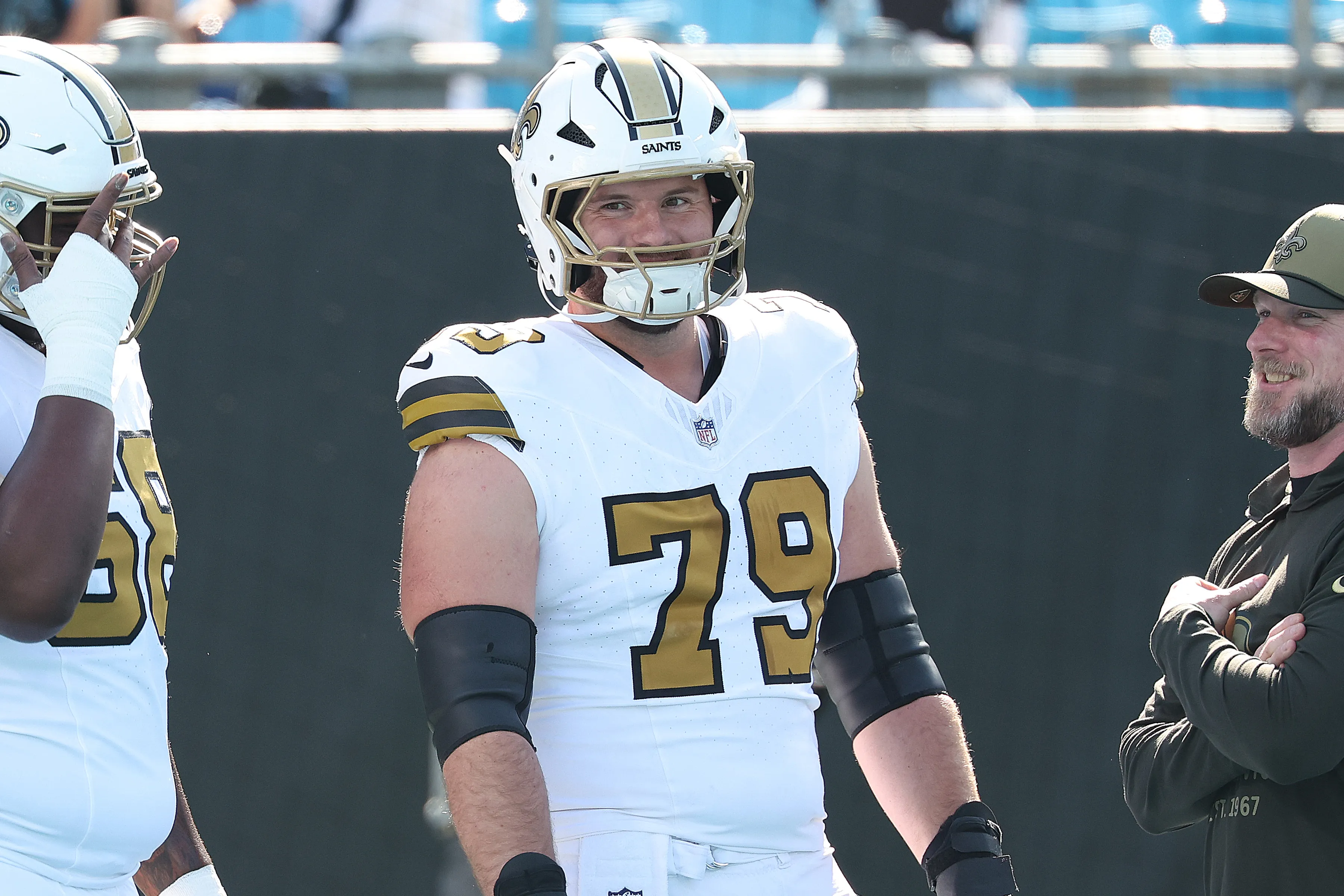
Fortner’s career has been a tale of two tapes. His first two years in Jacksonville were rough (41st of 43 centers in 2022, 39th of 40 in 2023). Then he got traded to New Orleans, stepped in for the injured Erik McCoy, and played the best football of his life. PFF listed him among their “15 underrated 2026 NFL free agents set to cash in.” His 66.5 overall grade across 351 snaps ranked eighth among qualified centers, with 70.0-plus grades in pass and 65-plus grades in run blocking.
Small sample size? Yeah. But if the real Fortner is closer to the 2025 version than the 2022-23 version, that’s a cheap price for a starting-caliber center. If he reverts to pumpkin (2022-2023) form, we can all call him a backup and move on. At 27 and probably $3-5 million AAV, he’s worth a flier for camp competition.
Fred Johnson (Tackle):
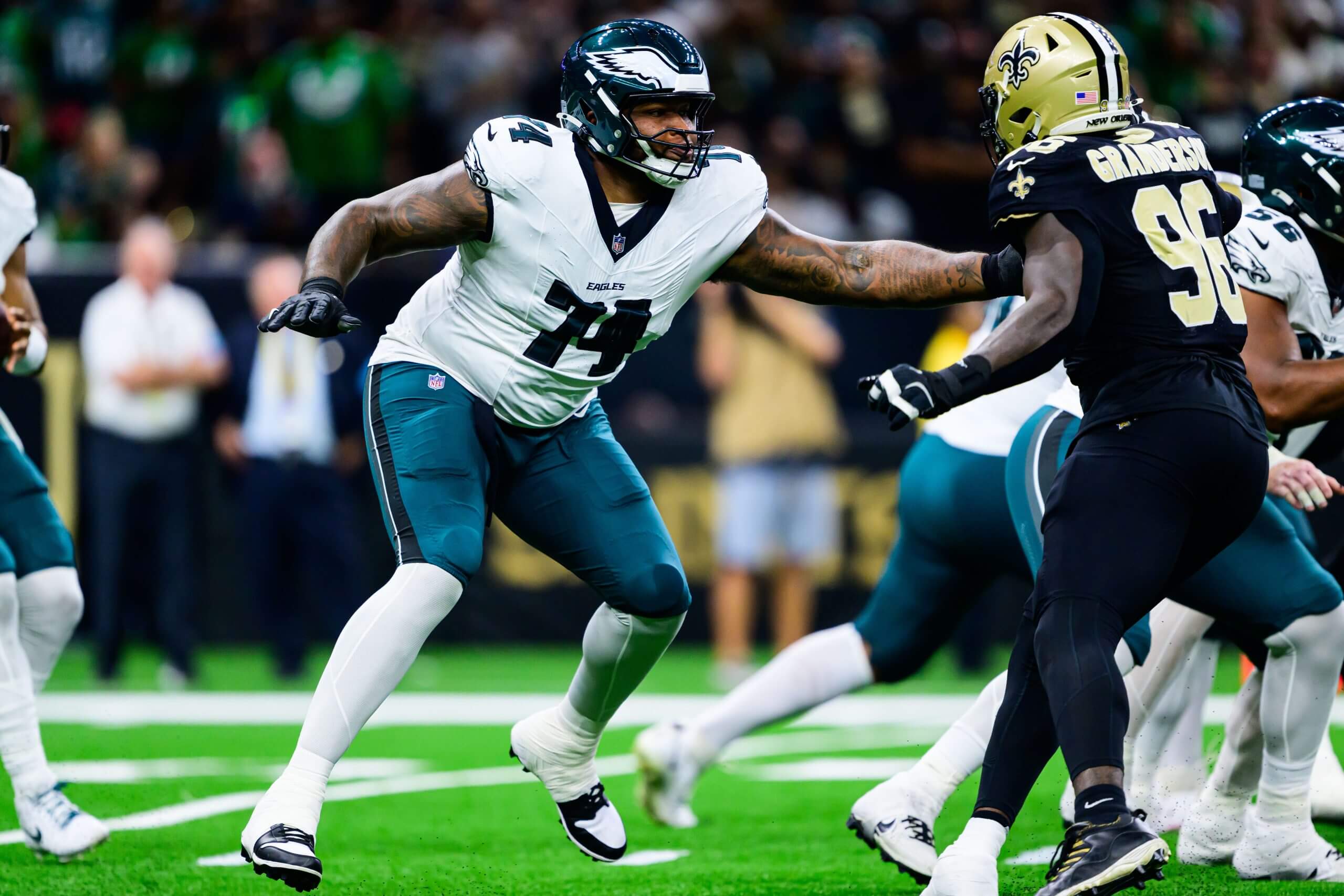
Johnson isn’t a guard, but he solves a different problem: tackle depth. The 6’7”, 326-pound swing tackle started nine games for the Eagles in 2025, filling in for both Lane Johnson and Jordan Mailata. He just won his second Super Bowl. He’s also done being a backup.
“I feel like I proved this year that I’m a starter in this league,” he said after the season. “There’s no going back to the swing tackle role.”
The Eagles have both tackles locked up, so Johnson will test the market. He’s not elite (76th of 85 tackles per PFF, eight sacks allowed), but he’s proven in big games and should come cheap. If the Texans want tackle insurance for Aireontae Ersery, Johnson is a proven commodity who’s played when it matters.
You don’t need both Fortner and Johnson. Fortner if you want interior competition. Johnson if you want tackle insurance. Either way, the goal is the same: bodies for camp, competition for jobs, depth for January.
Upgrading Key Skill Positions (RB & TE)
Breece Hall (Running Back):
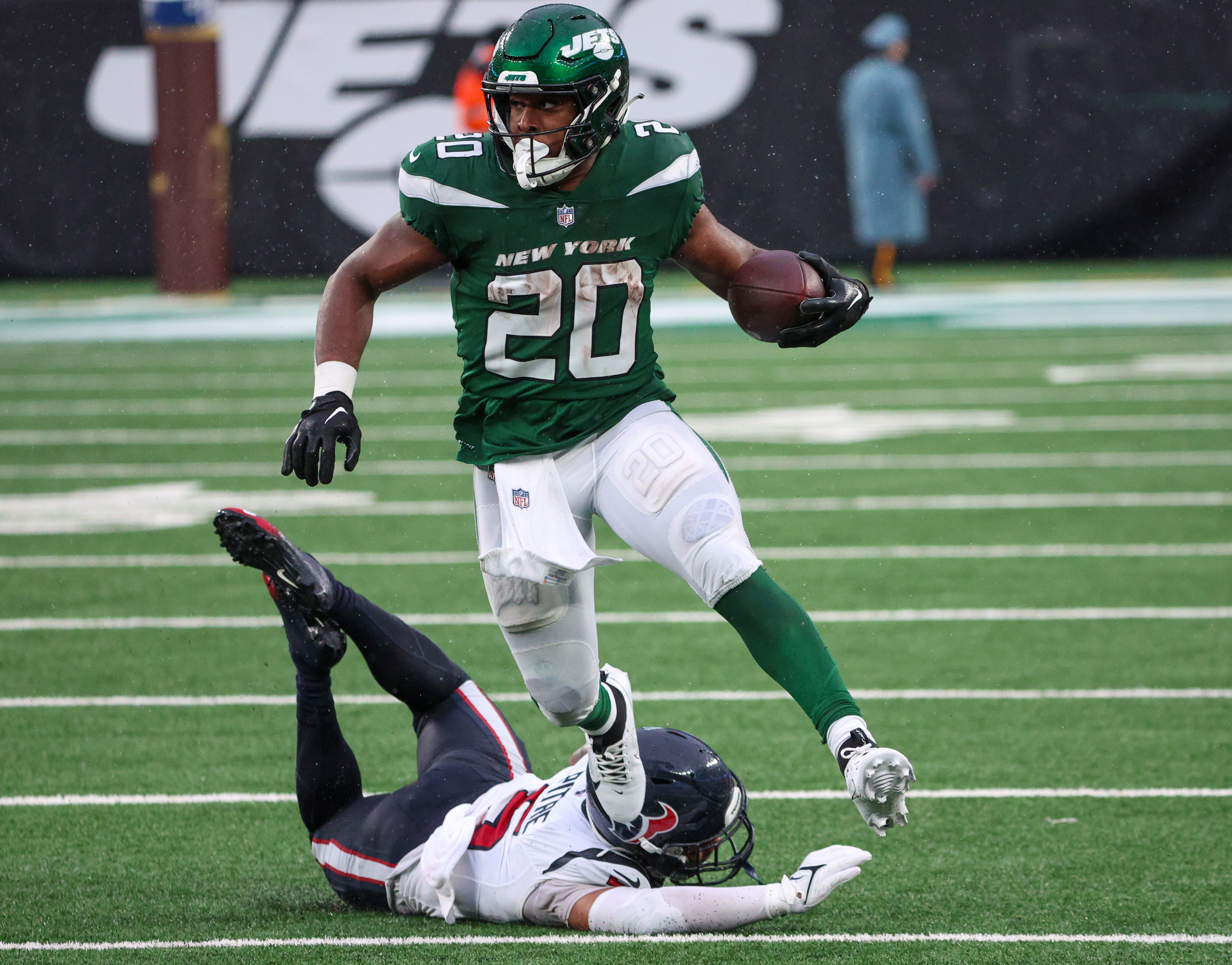
Let’s be honest about Breece Hall. He’s the best back in this class. Patient vision with explosive burst and is a legitimate two-way back. He just posted his first 1,000-yard rushing season (1,065 yards, 4.4 YPC) behind one of the league’s worst offensive lines, becoming the first Jet to hit that mark since Chris Ivory in 2015. At 24, entering his prime. Women desire him, fish fear him. The Texans should want him.
They just can’t (or really shouldn’t) afford him.
Spotrac projects a four-year, $41 million deal ($10.25 million AAV). ESPN estimates closer to $48 million ($12 million AAV). The franchise tag projects to roughly $14 million in 2026. Hall will be one of the highest-paid backs in the league, and the Jets have the cap space to match offers.
The Texans have $13.3 million in projected cap space before cuts (currently negative but that’ll change shortly). They need to pay the offensive line. They need to extend Will Anderson Jr. Spending $10-12 million annually on a running back when Woody Marks is making $1.3 million and the line still needs work? That’s bad roster construction.
It’s also a scheme mismatch. Hall ran 70% zone concepts in New York, one of the most zone-dependent workloads in the league. The Texans ran Marks and Chubb at 50% and 56% gap respectively. The Texans would be overpaying for a back optimized for a system Caley doesn’t run. Next.
Kenneth Walker (Running Back):
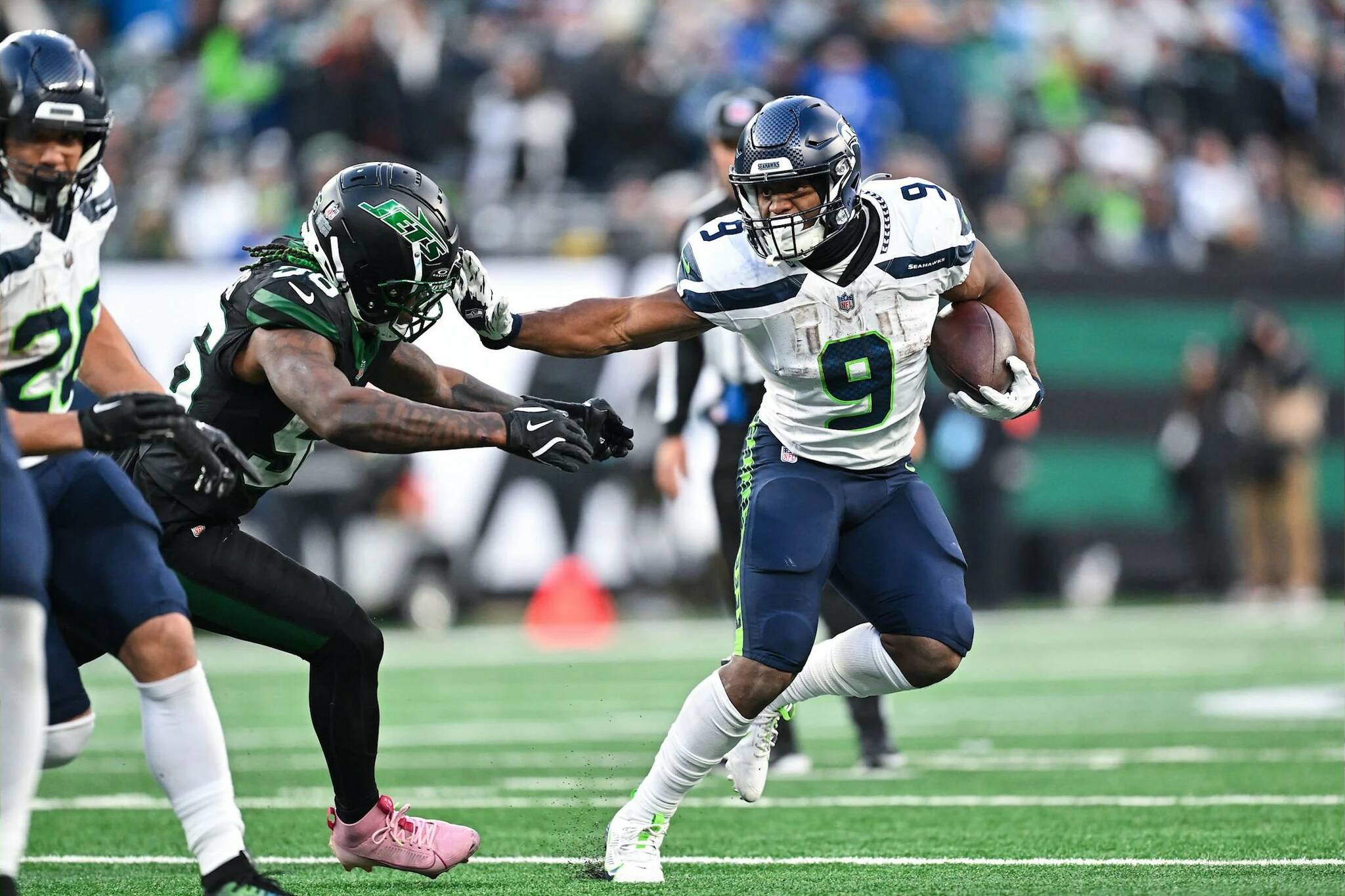
Walker is the value play.
He ran a 4.38 forty at 211 pounds. Next Gen Stats named him the second-most explosive runner in the NFL as a rookie. He hit 1,000 rushing yards in 2025 (1,027 on 221 carries, 4.6 YPC) despite splitting time with Zach Charbonnet, then exploded in the playoffs: 116 yards and three touchdowns against the 49ers, 6.1 YPC with the fastest average speed at the line of scrimmage of his career. At 25, only about half a year older than Hall, entering his prime.
The scheme fit is real. Hall ran 70% zone in New York. Walker’s split was more balanced: 55% zone, 41% gap. The Texans under Caley ran Marks and Chubb at 50% and 56% gap respectively. Walker has proven he can produce in the scheme Houston actually runs. Hall hasn’t.
His scouting report highlighted elite vision, burst through the hole, and superior cut-back ability (things that would go great with the superior offensive line we’ve constructed so far). Those traits should translate regardless of scheme, but they’re especially valuable on gap and duo runs where hitting the right hole at the right time is everything. Walker’s ability to hit the hole with violence and accelerate through contact fits Caley’s identity to a tee.
The difference is cost. Spotrac projects a four-year, $33.5 million deal ($8.4 million AAV). The Ringer projected $8-11 million annually. That’s meaningfully cheaper than Hall. Walker is more boom-or-bust (he’s a home-run hitter, not a chain-mover) and has a longer injury history. But at that price, with a scheme fit Hall can’t match? He’s the real prize.
Kenneth Gainwell (Running Back):
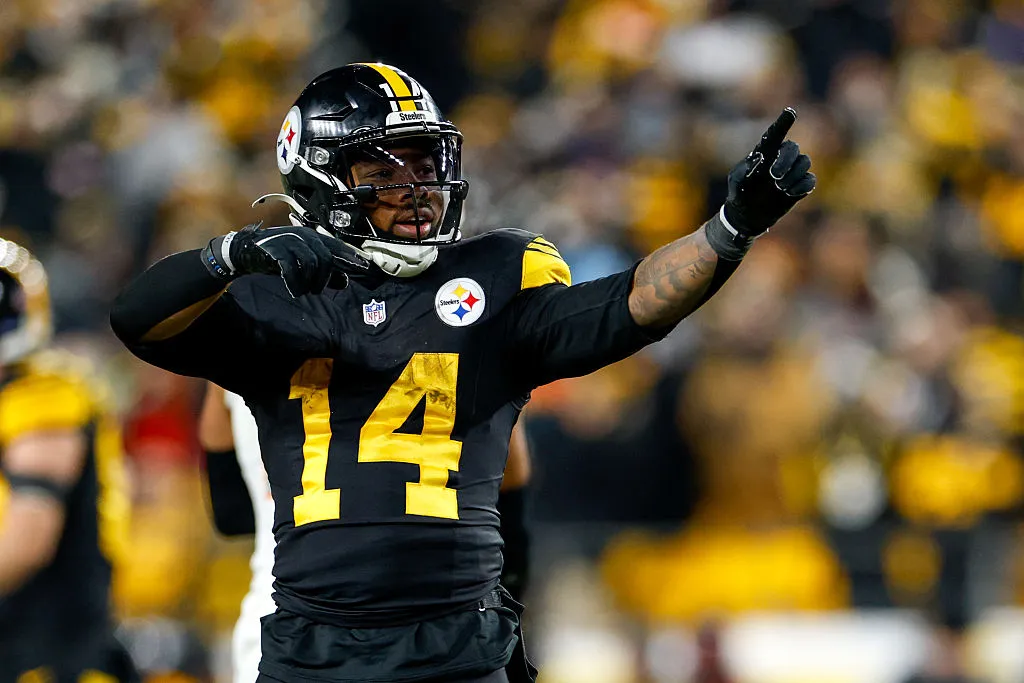
If Walker was the value play, Gainwell is the bargain bin play (valuest play, even) if you think Marks is enough.
He just had a breakout season in Pittsburgh: 537 rushing yards (4.7 YPC), 73 catches for 486 receiving yards, eight total touchdowns. All career highs. His teammates voted him team MVP, the first running back to win the award since Le’Veon Bell in 2016. He did this on a one-year, $1.79 million deal. That’s absurd value.
He’s 5’9”, 200 pounds. He’s not running through anybody. He grew up idolizing Darren Sproles, and the comparison holds. They’re both shifty, explosive in space, and natural pass-catchers who have lined up in the slot. Caley’s background includes six years in New England coaching fullbacks and tight ends in an Erhardt-Perkins system. Think James White, the ultimate third-down back who won Super Bowls as a complementary piece. Gainwell fits that mold.
His projected cost? Probably $4-6 million AAV. Pair him with Marks and you’ve got a committee for under $8 million combined. That’s less than Hall alone.
The question: do you believe Marks can be a lead back or just a complementary piece? His 3.6 YPC suggests the latter. If you agree, Walker is the upgrade. If you think Marks just needs a better line and a change-of-pace partner, Gainwell is your guy.
DeAndre Hopkins (Wide Receiver):
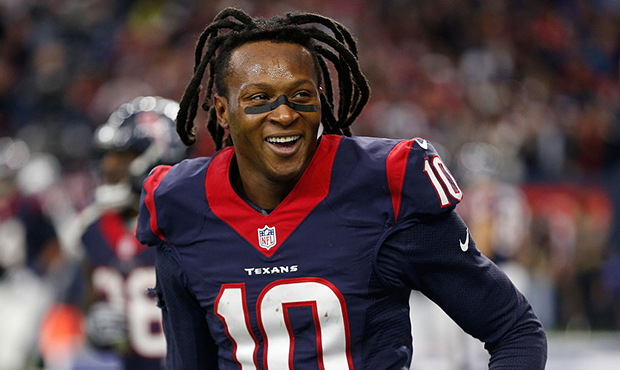
The Texans’ 2026 receiver room has promise but also risk. Nico Collins is the alpha. Tank Dell is the explosive complement, assuming he returns to form after tearing his ACL, MCL, LCL, and meniscus, plus dislocating his kneecap. (That’s not a typo. That’s one injury.) Jayden Higgins flashed as a rookie but remains unproven. Xavier Hutchinson and Jaylin Noel are competing for scraps.
That’s a lot of ifs. Hopkins could provide some stability (tame the Toro bull if you will).
His 2025 with Baltimore wasn’t great yeah, 22 catches, 330 yards, 2 TDs in 17 games. He played 33% of the snaps, buried behind Zay Flowers, Rashod Bateman, and Mark Andrews in an offense that runs through Lamar Jackson’s legs. But his hands haven’t abandoned him. His route-running IQ hasn’t faded. His ability to win contested catches in the red zone is still there.
You know the history. Drafted 27th overall by Houston in 2013. Seven seasons. Four Pro Bowls. Three first-team All-Pro selections. Second in franchise history behind only Andre Johnson in receptions (632), receiving yards (8,602), and touchdowns (54). He was supposed to be a Texan for life.
Then Bill O’Brien traded him for David Johnson and a bag of footballs.
The old regime (Bill O’ Brien and Jack Easterby) is gone, DeMeco Ryans & Nick Caserio are here. The organization that wronged Hopkins doesn’t exist anymore. He still has family in Houston. Before the Super Bowl he greeted Cal McNair and his family on the sideline. He even gave his gloves to the McNair kids. Clearly the love is there.
If Dell comes back at 80%, Hopkins can absorb targets. If Higgins hits a sophomore wall, Hopkins can step up. If Collins gets doubled, Hopkins can win one-on-one. He’s the ultimate insurance policy. More importantly: he knows how to mentor. Having a future Hall of Famer in the room showing Higgins, Dell, and Noel how to prepare, how to study film, how to win at the line? That’s invaluable for a young receiver room still figuring it out.
He’s 33. Turns 34 in June. His 2025 production was his worst since his rookie year. He said he wants to play “at least one more year,” which sounds like a farewell tour.
Good. Let it be in Houston.
On a veteran minimum deal, as a WR3/WR4 who step in if Dell isn’t ready and has some of the best hands in the game, the risk is minimal. The prodigal son returns. NRG Stadium gives him a standing ovation in Week 1. You can’t buy that energy (although with Spotrac having him at $1.487M AAV, the Texans can and should).
Break Glass: The TE Contingency
Chig Okonkwo (Tight End):
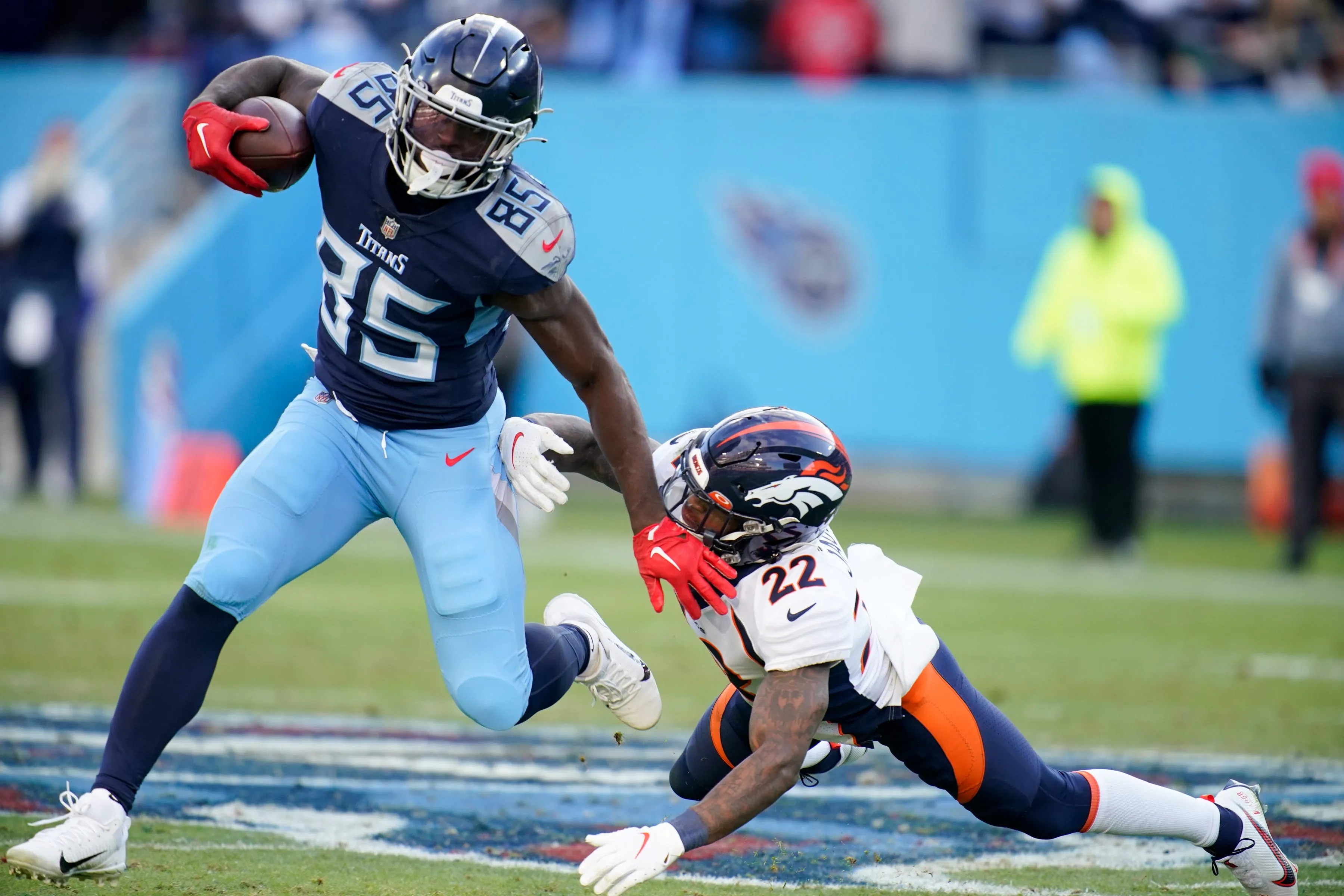
Dalton Schultz isn’t the problem. He set career highs in receptions (82) and yards (777) this season. He’s reliable. He’s also 29, making $12 million AAV, with a non-guaranteed 2026 salary.
If the Texans want an out, Okonkwo is the name. He’s 26, athletic, led the Titans in receiving yards despite Tennessee’s moribund offense. The concern is blocking, which matters in Caley’s gap-heavy system. He’d cost $6-8 million AAV.
Realistically? Houston probably runs it back with Schultz. But if they want younger and cheaper, Okonkwo is the contingency.
Stay the Course for Defense (LB)
Germaine Pratt (Linebacker):
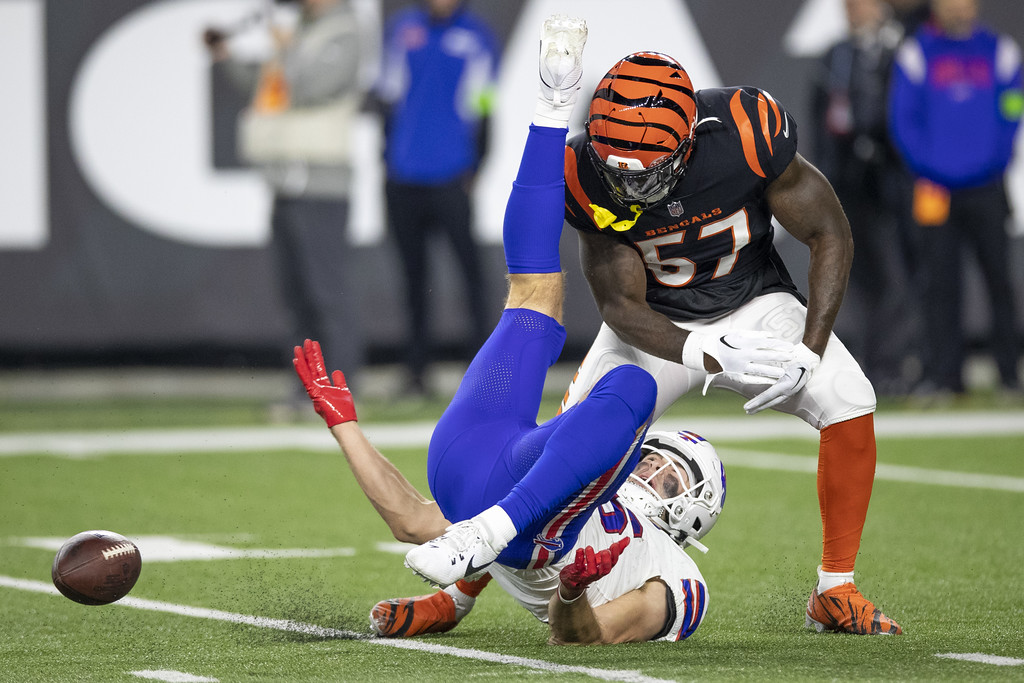
Germaine Pratt had a chaotic 2025. Requested a trade from Cincinnati in February. Released in June. Signed with the Raiders for $4.25M. Cut after four games. Landed with the Colts in October.
Through it all, he kept producing.
With Indianapolis he started 12 games and racked up 101 tackles. Made 101 of 107 attempts. That efficiency is absurd. He added an interception (picked off Trevor Lawrence in Week 17), three pass breakups, and a fumble recovery. The Colts needed a warm body at linebacker. Pratt gave them a legitimate starter.
His resume: 143 tackles in 2024 (led the Bengals, 10th in NFL). Seven career interceptions. Seven forced fumbles. His signature moment was the game-sealing pick on Derek Carr in the 2021 Wild Card that gave Cincinnati its first playoff win since 1991. The Bengals built a Super Bowl run on that play.
The Colts probably won’t bring him back. GM Chris Ballard said they need to “get younger and faster on defense.” That’s code for thanks for the rental.
Houston’s gain. With a caveat.
The Texans’ defense under DeMeco Ryans and Matt Burke is built on simplicity: low blitz rates, high zone usage, linebackers who flow sideline-to-sideline and drop into coverage. Henry To’o’To’o and Azeez Al-Shaair are athletic and rangy, perfect for that system. Pratt isn’t that. His coverage grades are inconsistent, and asking him to do what the starters do would be a square peg in a round hole.
But as LB3, replacing EJ Speed in sub-packages? The math changes. Pair Pratt with To’o’To’o or Al-Shaair and let them handle coverage responsibilities while Pratt plays downhill. Filling gaps against the run. Spying mobile quarterbacks. Attacking on early downs where Houston wins games. The Texans allowed just 3.67 yards per carry on inside zone this season. Adding a run-stuffing linebacker who can clean up what gets through the front four fits that identity.
The real separator is playmaking. Quay Walker (the other name floating around) has zero interceptions in four NFL seasons. Pratt has seven in six. The coverage concerns are real, but seven picks says he finds the ball when it matters.
Two releases in one season raises eyebrows. His 2024 tape showed 20 missed tackles per PFF. At 29 he’s not a long-term solution.
But Spotrac projects his market value at $2.87M AAV. For a rotational run-stuffer with ball skills at that price? That’s a steal.
The Bottom Line
Must-haves: David Edwards and Cade Mays. The offensive line got exposed. Fix it. Edwards is the best guard available. Mays is young, cheap, and Houston is already linked to him. Add one of Fortner or Johnson for camp competition and depth.
Smart additions: Kenneth Walker or Kenneth Gainwell. Walker if you want a lead back at a discount. Gainwell if you think Marks just needs a complementary piece. Don’t overpay for Breece Hall when the line still needs work.
Low-risk, high-reward: Germaine Pratt at linebacker ($2.87M projected) and DeAndre Hopkins at receiver (veteran minimum). Pratt is a playmaker at a position where you’re overpaying for Al-Shaair’s headaches. Hopkins is insurance for Tank Dell and closure for a franchise that owes him one.
The Texans can’t fix their quarterback in March. So they fix the line. They fix the run game. They add depth. And they hope Stroud figures the rest out.