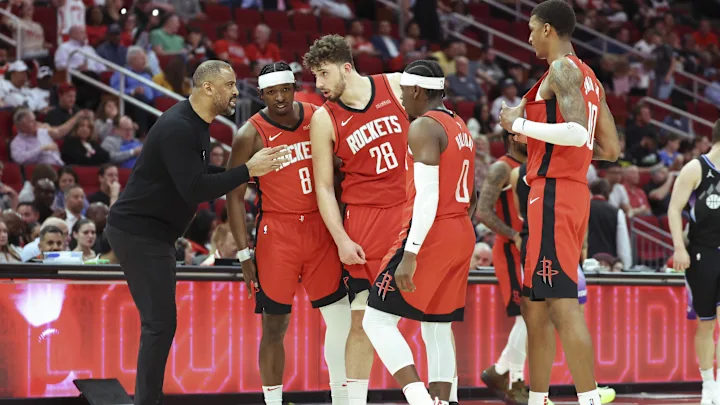
The Rockets are legit (sorta). Houston sits at 25-15 with a +6.6 net rating, fourth-best in the NBA, but they’ve dropped three of their last four and fallen from second to fifth in the West (dog eat dog world in the Western Conference). The VanVleet injury forced Amen Thompson into the starting point guard role and Reed Sheppard into a bigger bench workload. Both have responded. So has Alperen Şengün, who’s been the engine of everything Houston does on offense. The team’s struggling right now, but the individual performances are screaming for hardware. All-Star, All-NBA, All-Defense, 6MOY. Let’s lay it all out.
All Star
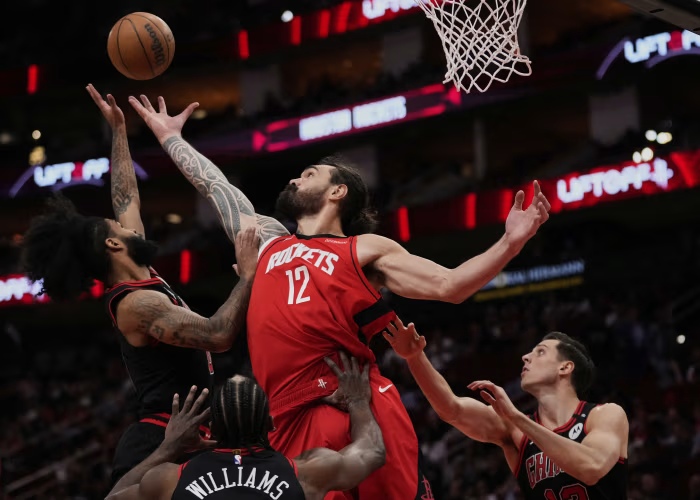
Alperen Sengun: Şengün deserves the typical sport cliches. He’s making the leap, never looked better, the games slowed down for him, blah blah blah. His 21.6 points, 9.2 rebounds, and 6.4 assists are all career highs. He’s top-20 in the league in both rebounds and assists, top-30 in scoring. The defense has caught up too. His 1.4 steals and 1.0 blocks per game are personal bests, and opponents are shooting just 48.1% against him. He’s gone from promising young big to problem (in a good way for the Rockets, bad way for opponents).
The new All-Star format helps his case. Team World needs a minimum of eight players, and five spots are effectively locked by Giannis, Luka, Wembanyama, Shai, and Jokić (assuming the knee heals in time and the games missed aren’t held against him). That leaves three spots for players like Şengün, Jamal Murray, Deni Avdija, and Lauri Markkanen, and Josh Giddey.
Markkanen is averaging 27.9/7.2/2.2 per game, but the Jazz are 14-29 and he’s missed time (9 games) with illness. Voters don’t like the combination of a tanking team and missed games. Giddey has been putting up near triple-double numbers (19.2/8.9/9.0), but the Bulls are below .500 (20-22) and he’s missed over 10 games with a hamstring injury. Murray (25.9/4.4/7.3) has the best team argument, leading the Nuggets to a 29-13 record without Nikola Jokic and just dropped 42 on the Wizards. Avdija (26.1/7.1/6.9) won Western Conference Player of the Week and already ranks seventh in fan voting.
Şengün’s case comes down to this. He’s the best (or second to the player below) player on a team with a top-five net rating, and he does something none of the other candidates do. Murray is a scoring guard. Avdija is a do-everything wing. Şengün is a true center who passes like a point guard. The positional uniqueness matters when Team World is already loaded with perimeter talent. Prediction: All-Star (Reserve)
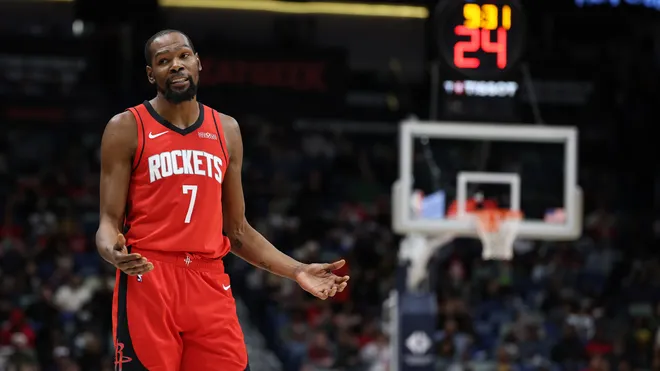
Kevin Durant: Kevin Durant is 37 years old, in his 20th NBA season, and still the best player on a team with a top-five net rating. That’s absurd. He’s averaging 26.1 points, 5.4 rebounds, and 4.6 assists while shooting efficiently enough to pass Dirk Nowitzki for sixth on the all-time scoring list. The Rockets have leaned on him as their offensive engine all season, and he’s delivered even as the rest of the roster has gone through shooting slumps around him. Age is supposed to slow players down. Durant’s spitting in the face of that.
The All-Star format requires a minimum of 16 American players, and Durant is a clear choice for one of those spots. Austin Reaves has impressive numbers (26.6/5.5/6.3) but has missed games with a calf injury. Harden (25.8/4.7/8.1) and Kawhi (27.3/6.3/3.5) are putting up big numbers for the Clippers, but even with their recent win streak, L.A. sits at 18-23 and 11th in the West (voters notice the struggles). Durant has it all. Stats, team success, and legacy. The only question is whether he starts. I think he deserves to. Prediction: All Star (Starter)
All NBA
While All-Star voting occurs halfway through the season and is more popularity based (both fan and player-wise), All-NBA is what matters, with voters taking into account players stats and their contribution to team success to determine their place on one of the fifteen spaces.
Alperen Sengun: Şengün’s numbers are All-NBA caliber. The question is how many frontcourt spots are even available.
All-NBA went positionless two years ago, and this season’s ballot will be dominated by guards. Jokić hyperextended his knee and likely won’t qualify. Giannis is one missed game away from ineligibility. Wembanyama has been in and out with calf and knee issues, flirting with the 17-game limit. That leaves a frontcourt vacuum.
The options to fill it are limited. Karl-Anthony Towns is putting up 20.9/11.5/2.9 in New York, but his shooting has cratered. He’s at 46.6% from the field and 35.7% from three, both well below his career marks (52.1% and 39.8%). Voters remember the guy who shot 40% from deep. They’re not seeing that guy this year. Chet Holmgren is the DPOY favorite and averaging 17.8/8.5/2.0 blocks, but the counting stats don’t pop the way All-NBA typically demands and the Thunder already have standout SGA stealing the spotlight. Bam Adebayo’s Heat are middling and 17.0/9.7/2.7 (on 44.3% FG%) isn’t particularly impressive for a potential All-NBA selection.
Şengün is averaging 21.6/9.2/6.4 on a team with a top-five net rating. He’s running the offense like a point center, a skillset only Jokić shares at this level. More points than Towns, more assists than anyone in the conversation, better team context than most. Third Team is realistic. Second Team is possible if the injury carnage continues. Prediction: All-NBA Third Team
Kevin Durant: Durant already has 11 All-NBA selections. At 37, he’s chasing a 12th.
The projected First Team is guard-heavy: Gilgeous-Alexander, Dončić, Brown, Brunson, Cunningham. Durant isn’t displacing any of them. Brown is averaging 29.8/6.6/4.7 as the clear top option in Boston with Tatum out. The guards are putting up historic numbers on winning teams. First Team is off the table.
The Second Team is where it gets interesting. The frontcourt is practically nonexistent. Giannis and Wembanyama are flirting with the 17-game limit. LeBron is averaging 22.3 points at 40 years old, respectable but not All-NBA caliber anymore (unless you know, LeLifetimeAchiementAward). Kawhi is putting up 27.3 per game, but the Clippers are 18-23 and voters care about team success. Durant is the last forward standing on a contending team with the production to back it up.
26.3/5.4/4.5 on 51% shooting. 14th in EPM, 6th in estimated wins, 37 of 39 games played. Best player on a team with a top-five net rating. The minor knock is that he’s sharing the load with Şengün instead of carrying a franchise solo. Voters have overlooked it in the past. They can do it one more time, right? Prediction: All-NBA Second Team
All Defense
Amen Thompson: Amen isn’t the Amen of last year (tough year for prayers, amiright?). That version was a genuine gamebreaker on defense, taking the opponent’s best player while roaming as a help defender. He finished fifth in DPOY voting and made All-Defensive First Team. This year, the Rockets asked him to take on point guard duties after Fred VanVleet tore his ACL.
The box score numbers have dipped. 1.3 steals vs. 1.4, 0.5 blocks vs. 1.3. He’s gone from top-5 in DPOY voting to 31st in EPM. The advanced metrics tell a more nuanced story, though. He’s 6th in defensive win shares (6.2), 18th in defensive rating among qualified players, and opponents shoot 42.6% against him as the primary defender, 4.1% below their season averages. He’s still impacting winning. He’s just not terrifying anymore.
The competition is stiff. Chet Holmgren is the current DPOY favorite. Dyson Daniels and Cason Wallace are locking people down. Rudy Gobert has stepped it up a notch for the Timberwolves. Wembanyama, if he stays healthy, is the best defender in basketball. That’s five names already before more comparable candidates like Bam Adebayo, Draymond Green, or Amen’s twin brother Ausar. Tough crowd this year.
Second Team is the floor if he keeps this up. First Team requires the metrics climbing back to last year’s level. I don’t think they will. Prediction: All-Defense Second Team
6MOY
Reed Sheppard: Reed Sheppard isn’t the Reed of last year. This time it’s a compliment. As a rookie, he struggled to find a role in his inconsistent minutes, averaging 4.4/1.5/1.5 on 35.1% shooting from the field. Add in his poor defense, and he simply didn’t look the part of an NBA-caliber player. The Reed of this year is a sparkplug that has a legitimate argument to start for the Rockets (one I’ve made before, but I digress).
Averaging 12.8/2.6/3.2 on 57.5% TS% in 24.9 mpg is a remarkable improvement. The shooting has been even better from deep, knocking down 42% of his threes on 6.2 attempts per game. He’s also averaging 1.6 steals, a nod to the defensive activity that made him such an intriguing prospect out of Kentucky.
The 6MOY race has one simple eligibility rule: come off the bench more than you start. Sheppard qualifies easily, having started just once this season when injuries forced Ime Udoka’s hand. The competition is tighter. Keldon Johnson leads the race for San Antonio, putting up 13.6/6.2/1.3 on a scorching 57% from the field for a Spurs team sitting at 30-13. Jaime Jaquez Jr. leads the league in bench scoring at 15.9 points per game for Miami, but the Heat are hovering around .500.
That team context matters. The last five 6MOY winners played on teams that won 52 or more games. Johnson has the inside track because the Spurs are legitimate contenders. Sheppard’s numbers are comparable, but the Rockets’ 25-15 record and recent rough patch work against him. If Houston climbs back into the top three in the West and Sheppard keeps producing, he has a real case. Right now, he’s top-3 (and not one or three). Prediction: Top-3 Finalist
Four awards. Four different cases. Whether voters agree is one thing (they should, but I can’t fault bad taste). The Rockets are in position to stuff the ballots in a way they haven’t in years past. We’ll have to see whether the predictions hold over the remainder of the season.